Brand Identity Design in Lebanon
Logo, profile, corporate identity, visual image systems, and brand consistency.
A brand is what survives the people who made it
Strawberry Agency builds and manages brand identity design and corporate identity in Lebanon, from Jounieh - for companies starting from nothing, for institutions that have outgrown a logo drawn twenty years ago, and for organisations whose identity has quietly fragmented across forty different documents.
Brand management is the part most agencies stop short of. Making a logo is a project. Keeping a brand coherent across a syndicate’s congress programme, its press releases, its member communications and its stand at an exhibition is a discipline - and it is where identities usually fall apart.
Our in-house team of graphic artists and designers builds the mark, the system around it and the rules that keep it intact once dozens of people start using it without asking.
“Creating your complete marketing image.”
- IdentityNaming support, logo, mark and the full identity system
- SystemTypography, colour, grid, photographic and illustrative direction
- GuidelinesWritten rules, usage, do and do-not, and the assets to apply them
- CollateralStationery, print, signage, presentation and document templates
- DigitalBrand applied across web, social and campaign environments
- StewardshipOngoing management as the organisation and its output grow
What brand management covers
Brand strategy
Positioning, personality and the argument the brand makes - written before anything is drawn, so the design has something to express.
Identity design
Logo and mark, typographic system, colour, layout grid and the visual language that makes work recognisable without the logo on it.
Corporate identity
Stationery, document and presentation templates, email signatures, signage and vehicle livery - the unglamorous assets that carry a brand daily.
Brand guidelines
A usable manual: what to do, what not to do, and packaged assets. Written for the people who will actually apply it, not as a trophy document.
Application
The identity rolled out across web, campaign and event environments by the team that designed it.
Ongoing management
Custodianship as the organisation grows - new sub-brands, new formats, new teams, and the drift that comes with them.
How identity work runs
Audit what exists. Almost nobody starts from zero. We gather what is in circulation - and the gap between the official version and what people are actually using is usually the real brief.
Write the position before drawing. What the organisation is, who it serves, what it is not. Identity work that skips this produces marks that look considered and mean nothing, and it shows the first time someone asks why.
Design the system, not just the logo. A mark alone cannot hold a brand together. Typography, colour, grid and image direction do most of the daily work - they are what makes a page recognisable before anyone sees a logo.
Then make it survivable. Guidelines, templates and packaged assets, handed over with a session that makes sure the people who need them can use them. This is the step that decides whether the identity holds in two years.
Audit and position
What exists, what is in use, what it should stand for. Delivered written and signed off.
Identity design
Mark and system designed, presented in real application rather than on a blank field.
System and collateral
Typography, colour, grid, templates, stationery and the assets the organisation uses daily.
Guidelines and handover
Written rules, packaged files, training, and a route back to us when something new comes up.
Identity and brand work
Lebanese IT Syndicate
Identity and launch programme for a national professional syndicate, taken from formation through to its official launch at the Casino du Liban Theatre.
LEBTECH
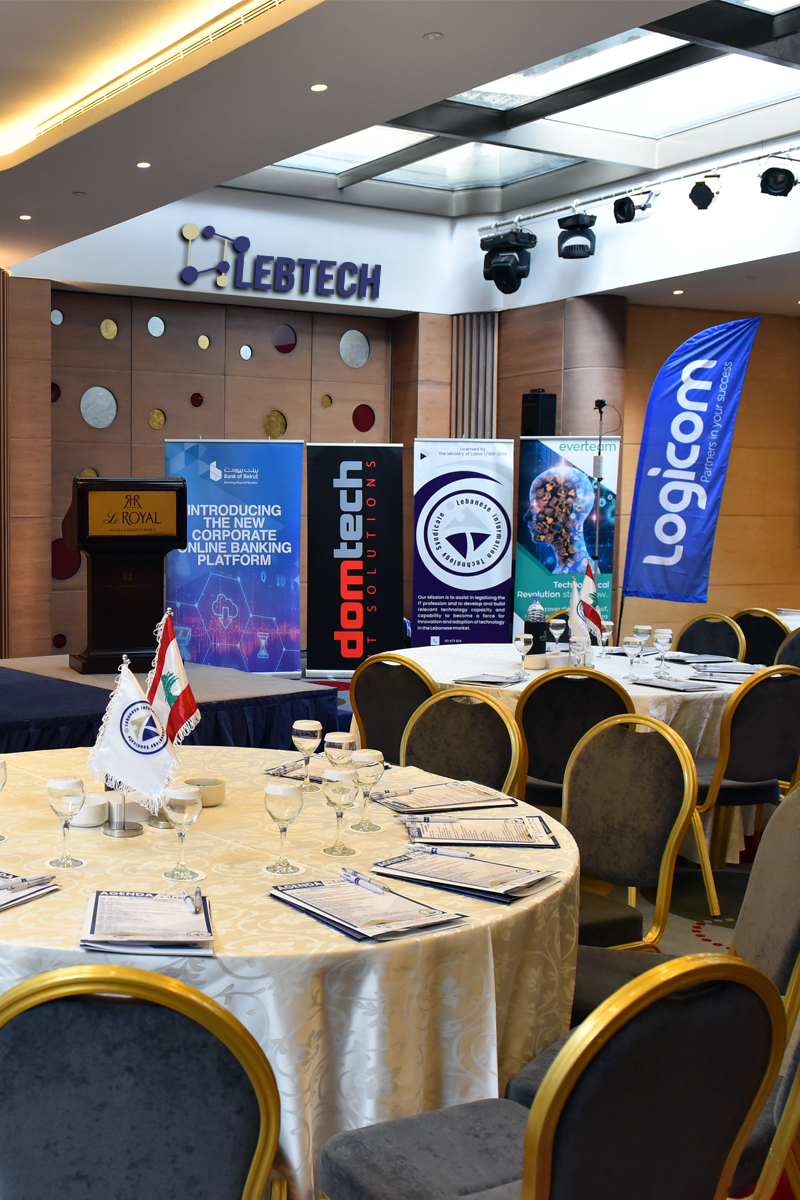
Event identity carried across two editions - from Le Royal, Dbayeh in 2018 to a three-day programme in 2025, applied to signage, print, digital and stands.
LACPA & LOPT
Brand and communications work for the Lebanese Association of Certified Public Accountants and the Lebanese Order of Physiotherapists, including the LOPT council reception in Dubai.
Client roster
Identity and corporate image work across retail, hospitality, property, education and professional services - more than ninety client relationships. See the roster.
The Food Trucks Festival
A public festival identity built to work at scale outdoors and small on a phone, on the same weekend.
Working with us
We only need a logo. Do you do that?
We do, but we will usually argue for at least a minimal system alongside it - typography, colour and a layout rule. A logo with nothing around it puts every future decision back on whoever is making the next document, and that is how brands drift.
How long does an identity take?
A focused identity with a core system is usually six to ten weeks. Full corporate identity with extensive collateral runs longer. Institutional work with committee approval runs longer again - and we plan for the approval cycle rather than being surprised by it.
Do you work with committees and boards?
Routinely. Syndicate, order and association work means committee sign-off, protocol and formal correspondence. We structure presentations for group decisions rather than for one person in a room, because that is what actually happens.
What if we already have a brand but nobody follows it?
That is the most common version of this brief. It is usually not a design problem - it is that the guidelines are unusable, the templates do not exist, or nobody was ever shown. We audit, fix the system, and make the correct thing easier to do than the wrong one.
Who owns the artwork?
You do, on completion. You receive working and output files, packaged assets and the written guidelines. Nothing is held back to keep you dependent on us.
Start with what you already have.
Send us what is in circulation - the logo, a recent document, whatever the team is actually using. We will tell you whether this is a refresh, a rebuild or a guidelines problem, and what it costs.